Open Nav


I. Introduction: Why Does the Vibratory Hammer Seem Fine, Yet the Job Still Doesn’t Go Smoothly?...
I. IntroductionIn the previous article, we introduced the three primary methods of soft ground...
Soft ground improvement, also known as soft soil treatment or soft foundation stabilization, refer...
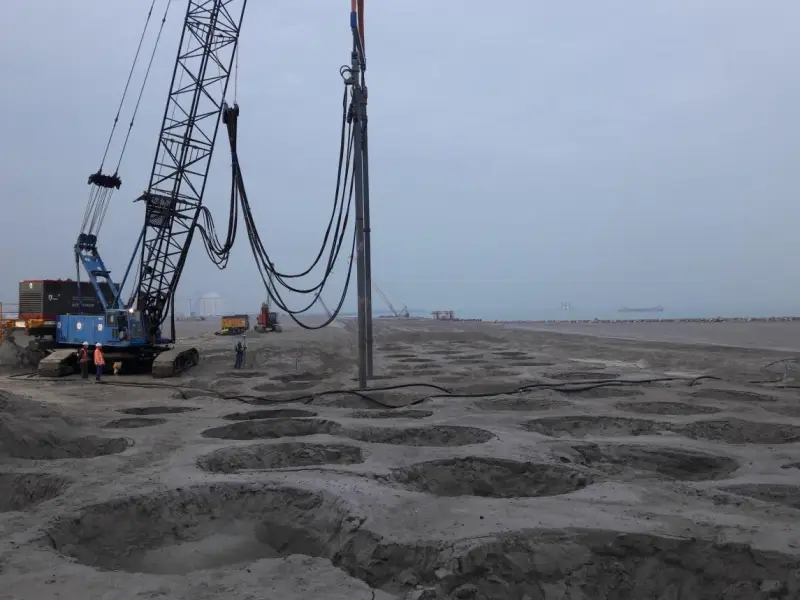
As mentioned earlier, there are three main methods for improving soft soil foundations, and the dy...

Soft ground improvement, also known as soft soil treatment or soft foundation stabilization, refers to the engineering process of artificially reinforcing and modifying natural soft ground when its strength, deformation characteristics, or stability cannot meet the requirements of construction projects. The goal is to increase bearing capacity, reduce settlement, and enhance stability.
Construction methods for soft ground improvement are broadly divided into two categories: the replacement/exchange method and the compaction/consolidation method.
Method Description
Replacement/Exchange Excavating the weak shallow soil layers and replacing them with high-strength, stable materials (e.g., gravel-sand mixtures, lime-soil) and then compacting.
Compaction/Consolidation Using impact energy or static pressure to densify shallow soil layers and increase their strength. Example: Dynamic Compaction (heavy tamping).
According to machine-assisted construction techniques, there are three main methods:
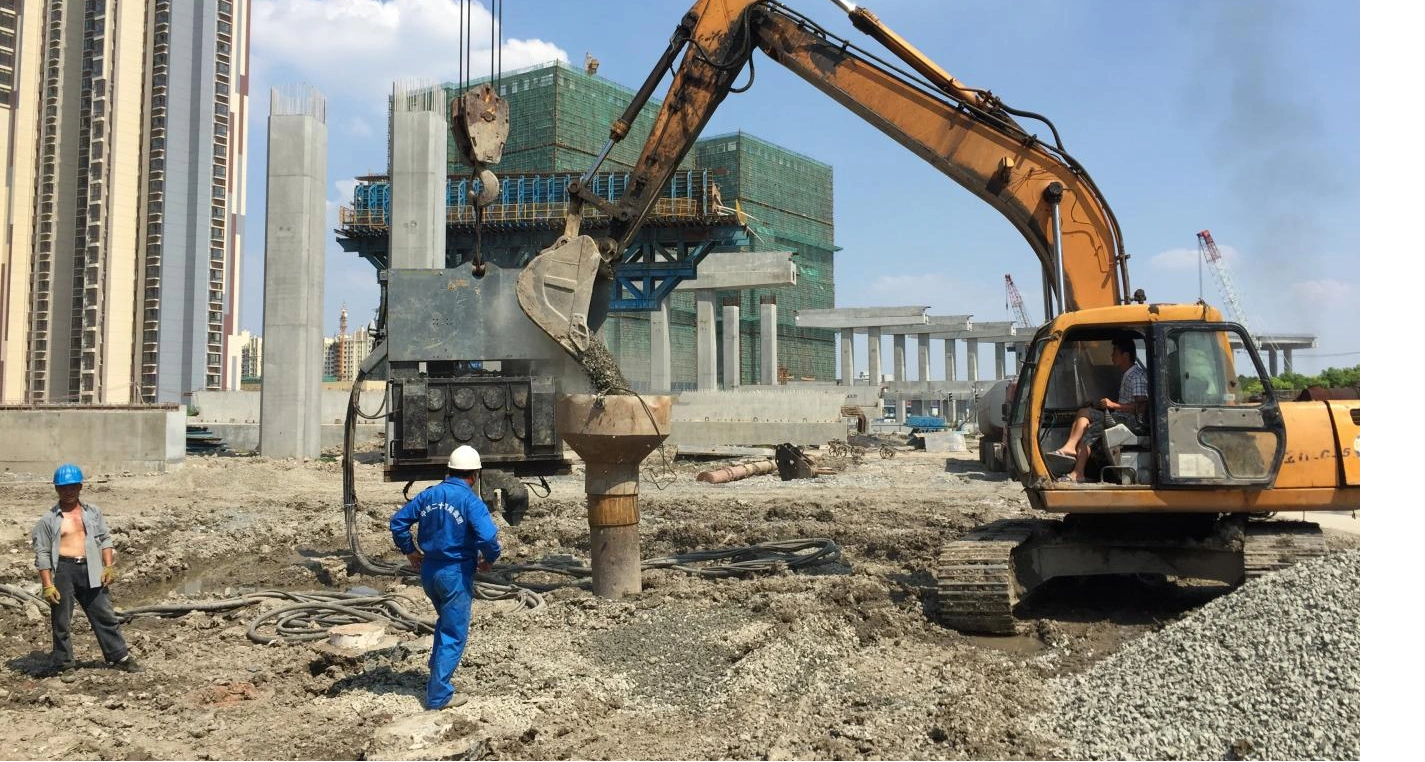
Construction equipment: Modified impact hammer + excavator/bulldozer.
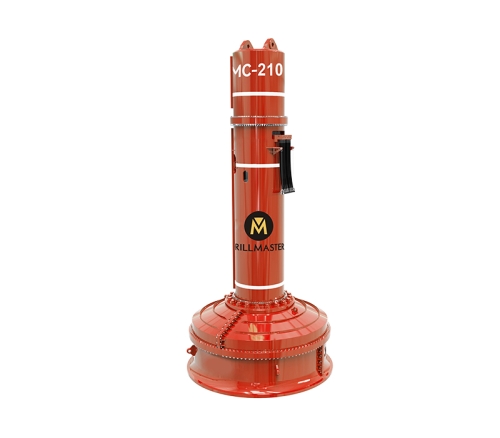
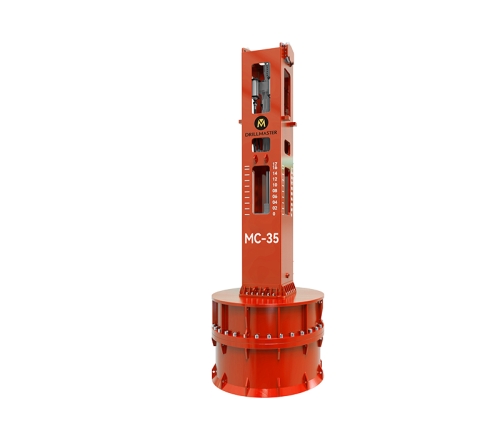
Working principle: This is a relatively high-frequency, low-amplitude dynamic compaction technique. The equipment uses a tracked excavator or bulldozer as its carrier, with a modified impact hammer mounted on the boom. The impact hammer (typically weighing 3–19 tons) drops from a height of 1.2 to 1.5 metres at a high frequency of 40 blows per minute or more, repeatedly striking a steel foot that remains in contact with the ground, thereby transmitting impact energy directly into the ground.
Advantages:
- High efficiency and low cost: fast construction speed, particularly economical for small sites or space-constrained projects.
- Low vibration impact: compared with traditional dynamic compaction, its high-frequency, low-amplitude characteristics cause less disturbance to surrounding structures.
- Environmentally friendly: produces no excavated spoil and has a low carbon footprint.
- Convenient operation: equipment is based on an excavator modification, offering high mobility and eliminating the need for large cranes. It is typically equipped with an intelligent monitoring system that automatically records and adjusts compaction parameters.
Limitations: Mainly suitable for shallow ground treatment; its effectiveness in improving deep soft layers is limited.
Applicable conditions:
- Improvement depth: a shallow to medium-depth ground improvement technique, with an effective improvement depth typically of 3–7 metres, and up to 9 metres under ideal conditions.
- Suitable soil types: particularly effective for loose granular soils such as sands, silts, fills, and industrial waste sites.
- Typical applications: ground reinforcement, settlement reduction, bearing capacity improvement, treatment of liquefiable soil layers, and compaction of high embankments and bridge abutment backfills in highway construction.
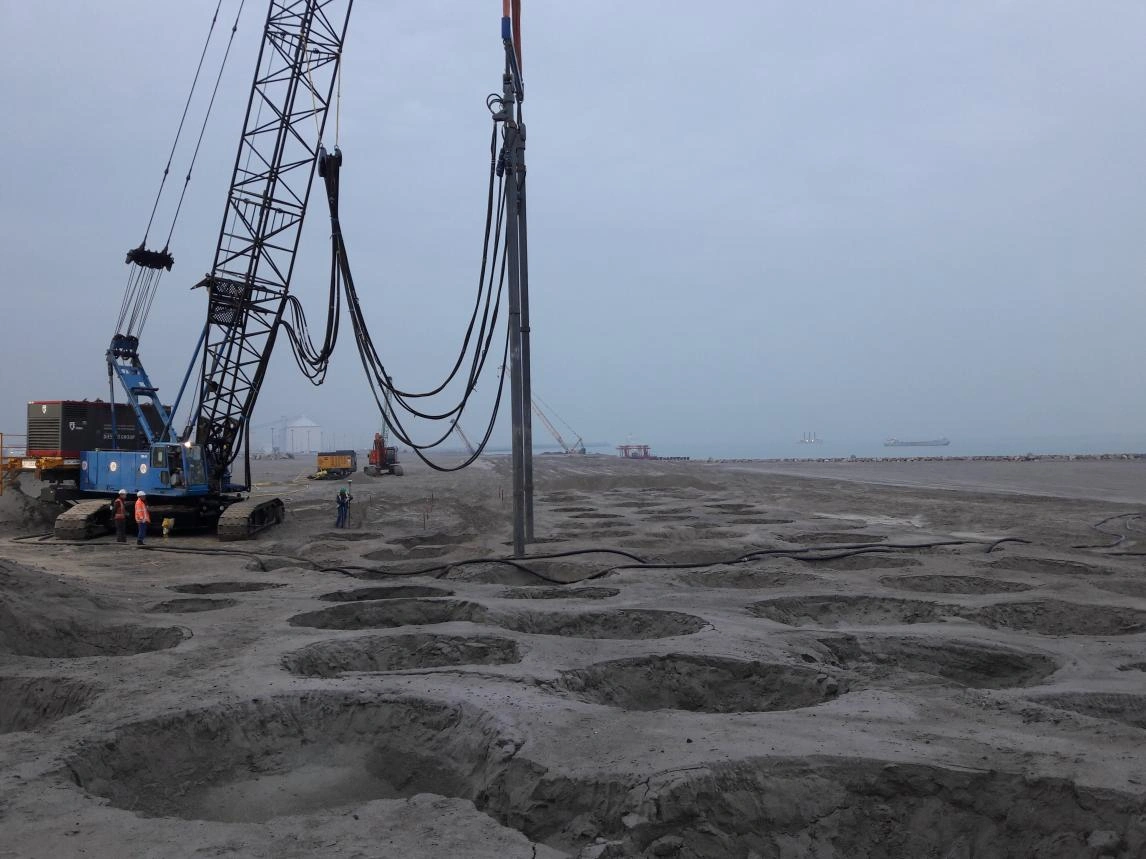
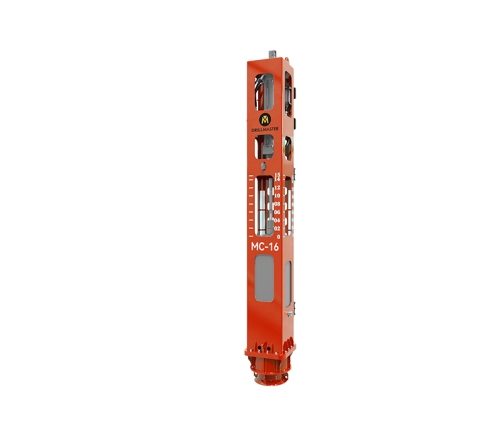
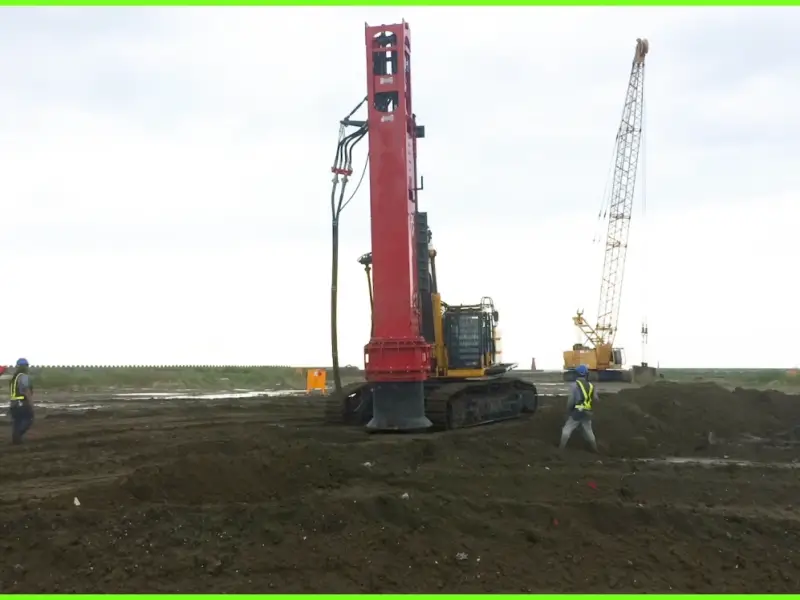
Construction equipment: Vibroflot (vibratory probe) + excavator / crawler crane / power unit / pile frame.
Working principle: A vibroflot that generates horizontal vibrations is used. Under the combined action of vibration and high-pressure water jets (wet method) or compressed air (dry method), a hole is formed in the soil. After hole formation, coarse granular material such as crushed stone is fed into the hole in batches and compacted by the horizontal vibrations of the vibroflot, forming dense stone columns. These stone columns together with the surrounding soil form a composite foundation that improves bearing capacity.
Advantages: Large improvement depth (up to 40 metres), wide applicability, and effective enhancement of the strength and stability of various types of soft ground.
Limitations: Construction generates a large amount of slurry, requiring a supporting slurry treatment system; the equipment is relatively complex and has certain requirements for electricity and water supply.
Applicable conditions:
- Vibro-replacement method: Suitable for clays, silts, saturated loess, and man-made fills with an undrained shear strength of no less than 20 kPa. In this method, the stone columns mainly act as "replacement" and "drainage" elements.
- Vibro-compaction method: Mainly suitable for sand and silt foundations. The vibration of the vibroflot causes loose sand particles to rearrange and become denser.
- Column specifications: maximum diameter up to 1.2 metres; maximum length up to 40 metres.
Process options: divided into wet method (water jet) and dry method. The wet method is the most widely used; the dry method eliminates the need for slurry treatment, but due to issues such as motor cooling, its applicable soil types and depths are limited, and it is rarely used in China.
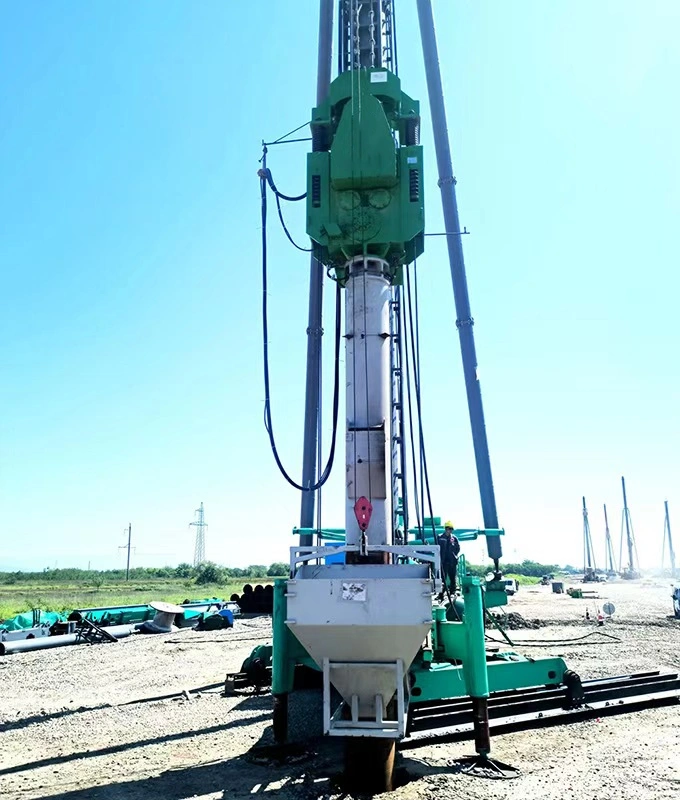
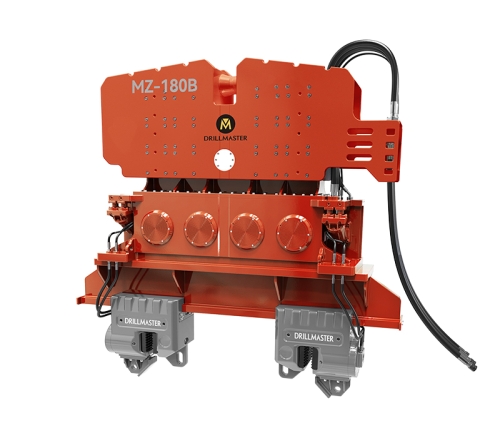
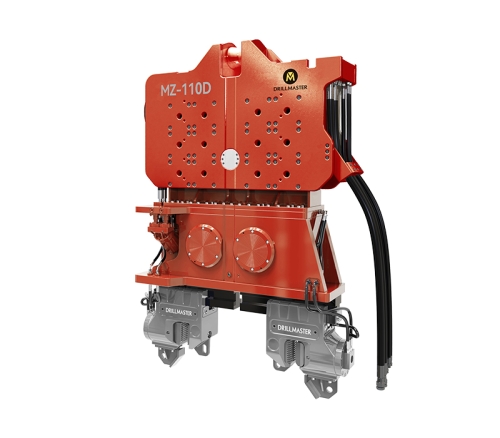
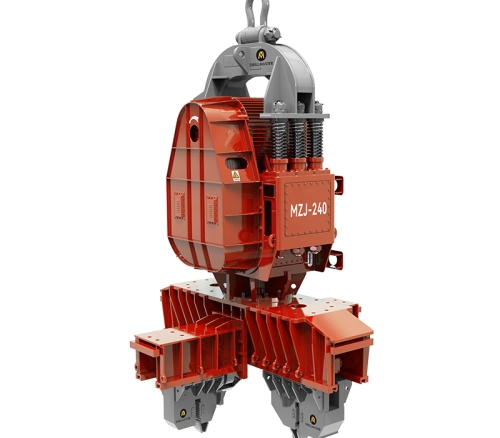
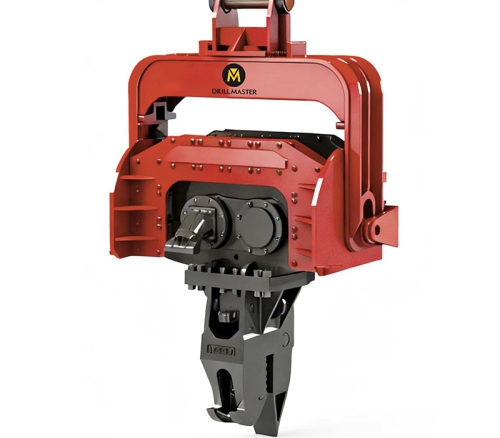
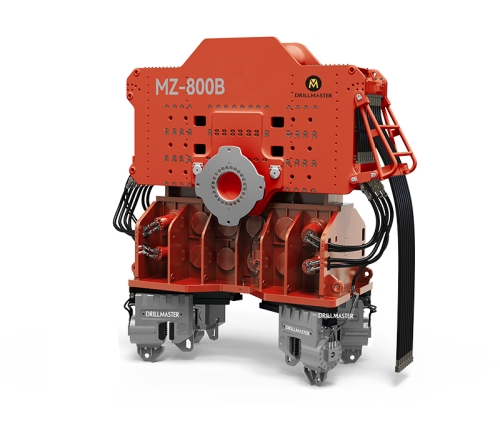
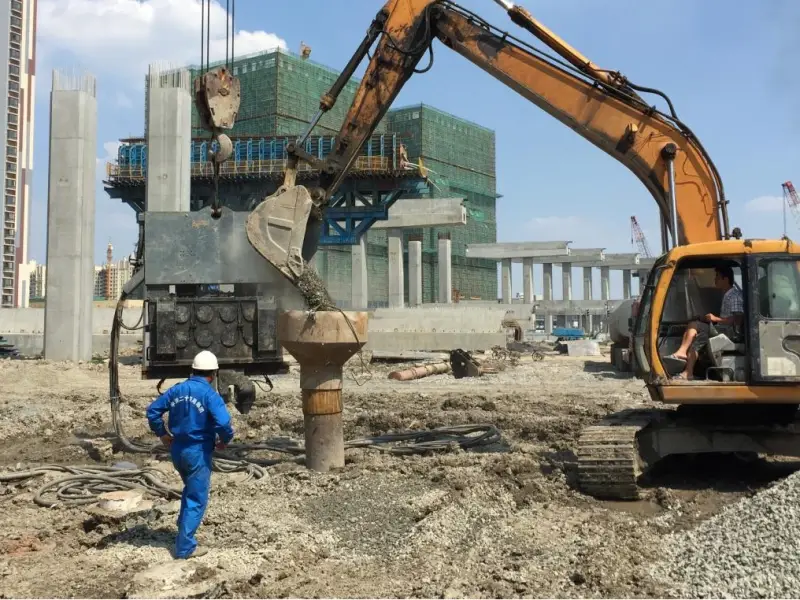
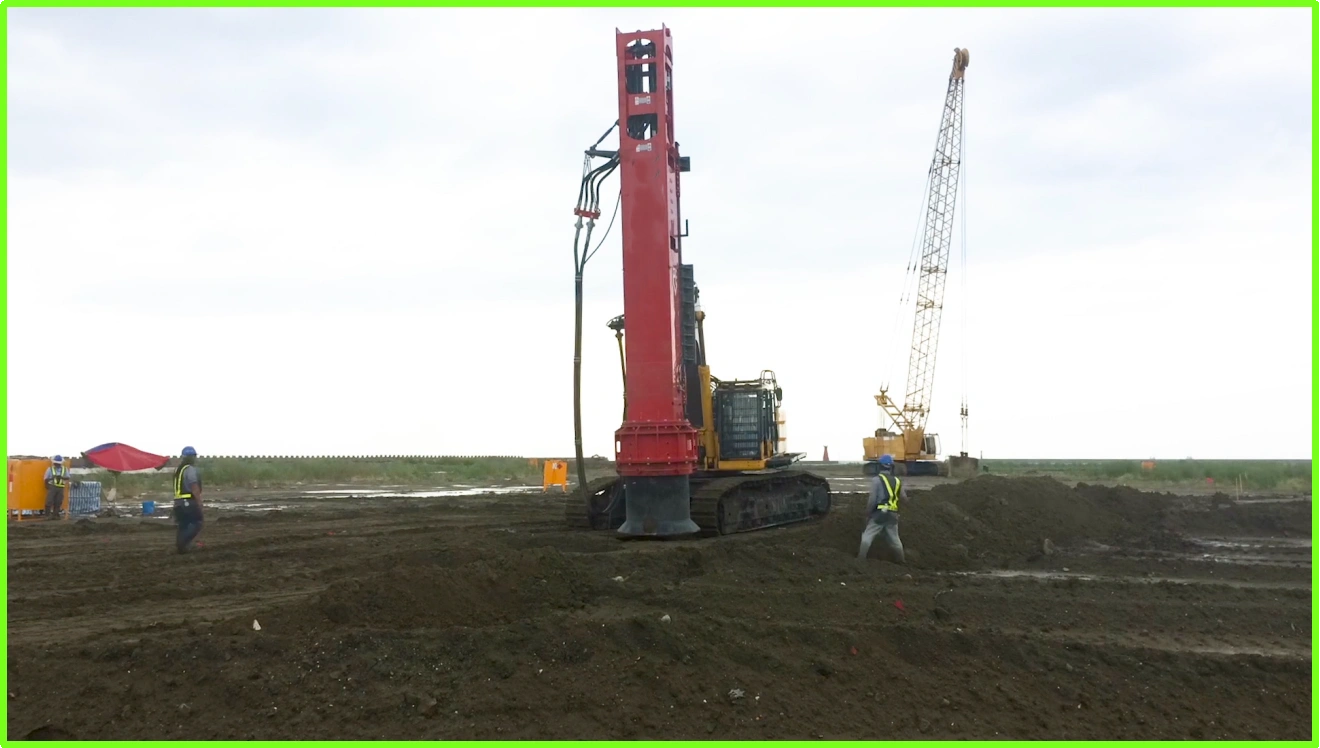
Construction equipment: Vibratory hammers (hydraulic vibratory hammers and electric vibratory hammers).
Working principle: Prefabricated piles (e.g., reinforced concrete piles, steel pipe piles) are driven into the soil to the designed depth by mechanical force. Vibratory driving is a primary form: a high-power vibratory hammer is mounted on the pile top, and its vertical vibrations significantly reduce the skin friction along the pile shaft, allowing the pile to penetrate under its own weight and the vibratory force.
Advantages:
- Large installation depth: can penetrate shallow weak layers and transfer loads to deep, competent bearing strata.
- Controllable pile quality: piles are factory-prefabricated, ensuring reliable quality.
Limitations:
- Soil displacement effect: this is the main drawback. The driving process displaces surrounding soil, which may cause heaving or lateral displacement of adjacent structures and utilities.
- Vibration and noise: construction-generated vibration and noise have certain environmental impacts.
- Limited ability to penetrate hard layers: penetration may be difficult when encountering dense sand layers, gravel layers, or other hard interlayers.
Applicable conditions:
- Suitable soil types: applicable to plastic clays and sands; particularly effective in sands where shear strength decreases significantly under vibration.
- Pile specifications: maximum diameter up to 1.3 metres; 40-metre length is a standard specification.
- Typical applications: widely used in buildings, bridges, and other projects requiring deep foundations to carry large loads. BackOur professional team will reply you as soon as possible.
 English
  Español
 العربية