Open Nav



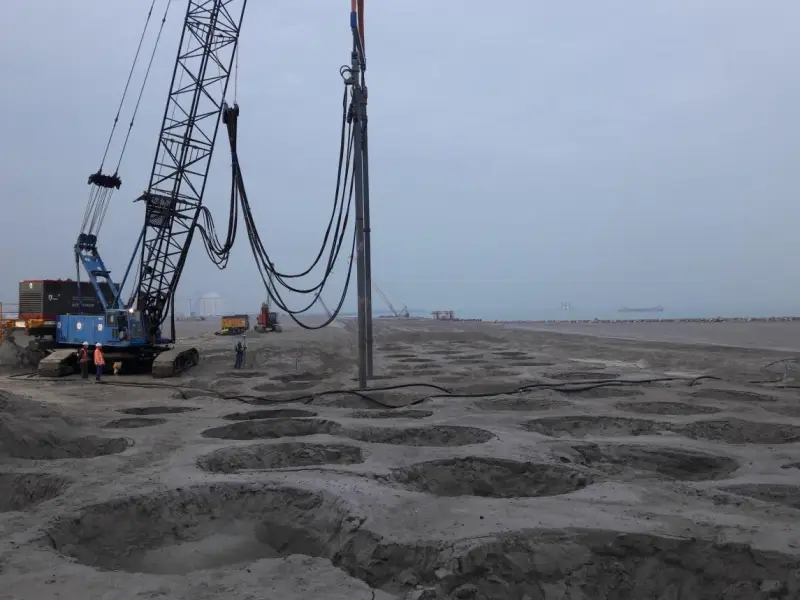
As mentioned earlier, there are three main methods for improving soft soil foundations, and the dyn...
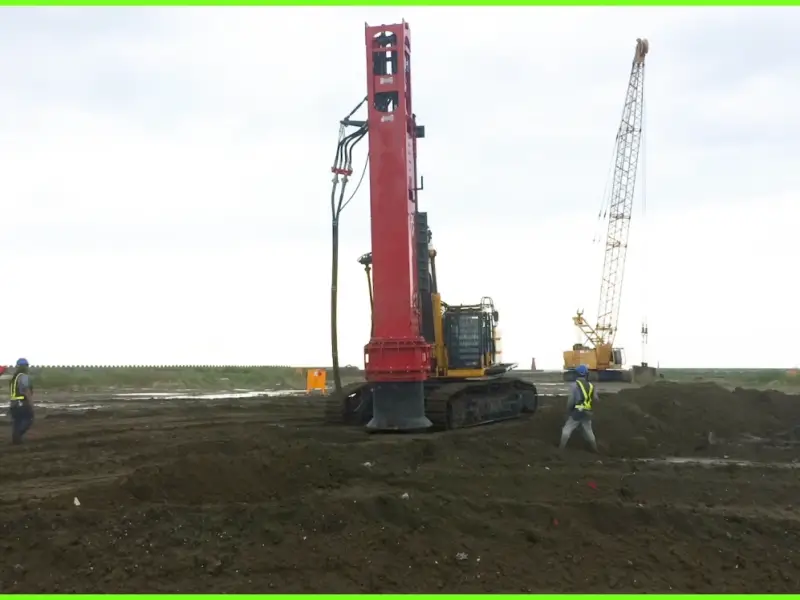
I. IntroductionIn the previous article, we introduced the three primary methods of soft ground imp...
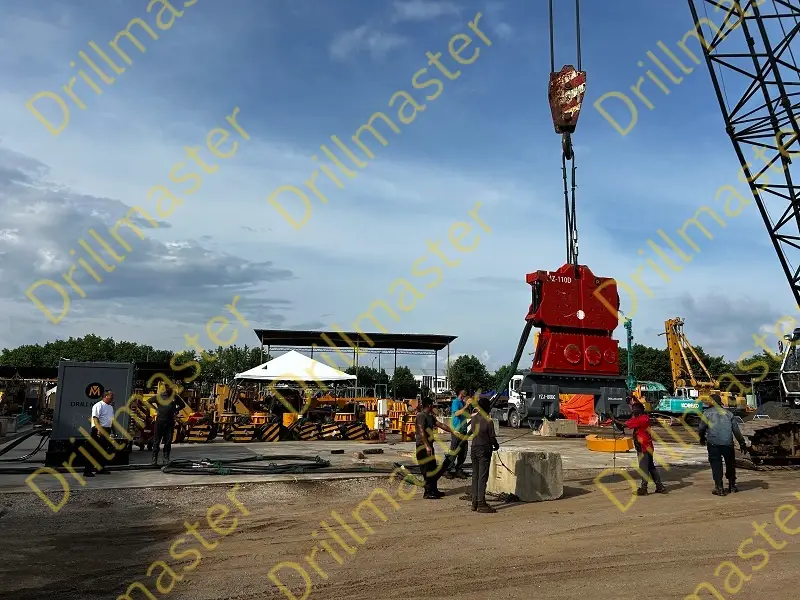
I. Introduction: Why Does the Vibratory Hammer Seem Fine, Yet the Job Still Doesn’t Go Smoothly?O...
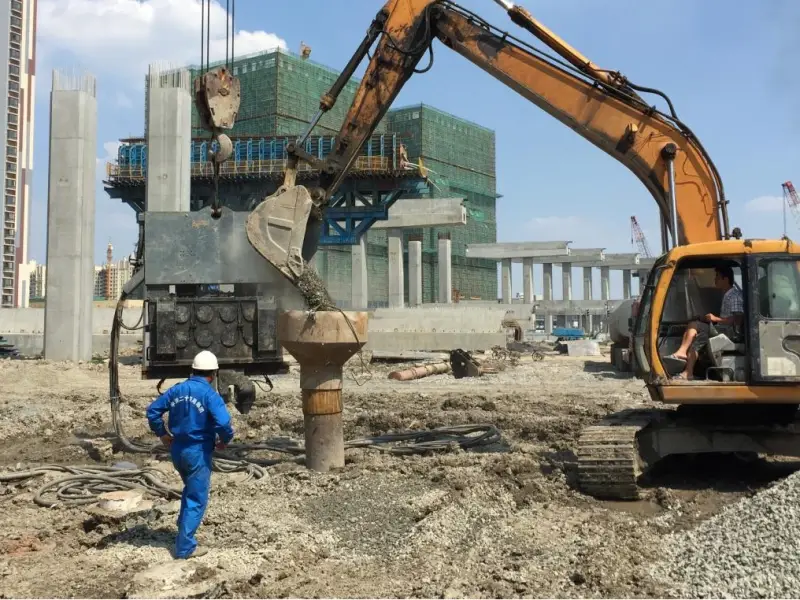
La mejora de suelos blandos , también conocida como tratamiento de suelos blandos o estabilización ...
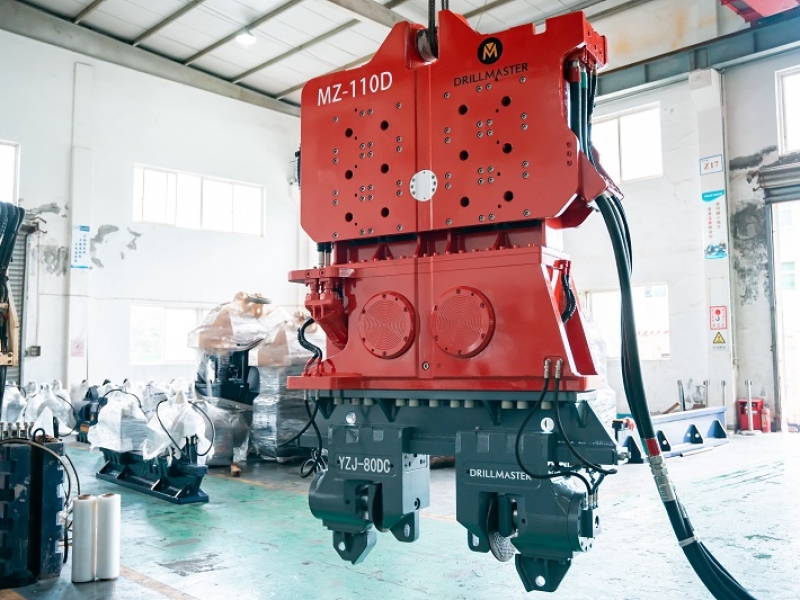
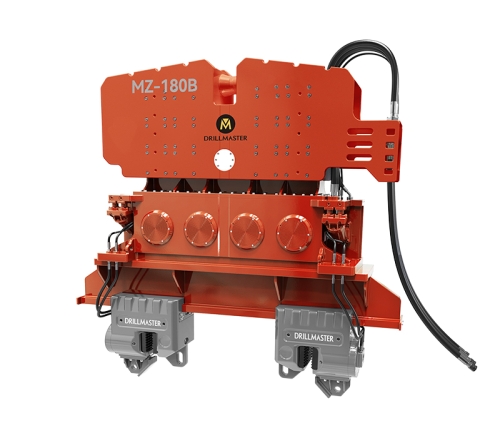
Tras una estricta inspección y pruebas de calidad, nuestro martillo vibratorio hidráulico MZ-110D h...
In the previous article, we introduced the three primary methods of soft ground improvement. This article focuses on the most common challenges encountered during Rapid Impact Compaction (RIC) construction, as well as the critical considerations that are often overlooked but have a significant impact on project performance.
In many engineering projects, it is commonly assumed that any soft ground can be improved using Rapid Impact Compaction (RIC). However, this is a misconception. RIC is not suitable for every type of soil, and its effectiveness largely depends on soil characteristics, moisture content, groundwater conditions, and the nature of the fill material.
Without a thorough geotechnical investigation and proper assessment before construction, even high-performance equipment and well-executed construction procedures may fail to achieve the desired ground improvement results.
Therefore, a comprehensive evaluation of ground conditions should always be the first step toward a successful RIC project.
Rapid Impact Compaction is a ground improvement technique that densifies soil by applying repeated high-frequency impact energy. The impacts rearrange soil particles, reduce void ratios, and increase soil density and bearing capacity.
RIC performs best in granular or partially granular soils where particle rearrangement can occur efficiently under repeated dynamic loading.
Typical applications include the following soil types.
① Engineered Fill
Engineered fill is widely used in industrial parks, logistics centers, port facilities, commercial developments, and residential construction projects.
Because the quality of fill placement often varies, these areas may contain loose zones, excessive voids, and insufficient bearing capacity. RIC effectively densifies the fill material, resulting in improved ground uniformity, increased stability, and enhanced load-bearing performance.
② Miscellaneous Fill
Miscellaneous fill typically consists of mixed materials such as crushed stone, sand, construction debris, and recycled materials. Due to its heterogeneous composition, the soil often exhibits uneven density and inconsistent engineering properties.
By applying repeated impacts according to a properly designed compaction grid, RIC reduces internal voids and improves the overall integrity and bearing capacity of the ground.
③ Sand and Silty Sand
Sand and silty sand possess good particle mobility, allowing soil grains to rearrange efficiently under dynamic impact loading.
As a result, RIC generally achieves excellent densification performance in these soils and is widely used for:
- Highway and roadway construction
- Airport pavements
- Container yards
- Storage yards
- Industrial platforms
④ Gravel and Coarse Granular Soils
For gravelly soils and coarse granular deposits, RIC further reduces the voids between particles, producing a denser and more stable foundation.
These materials typically respond well to dynamic compaction because of their high permeability and granular structure.
⑤ Loose Backfilled Areas
Many reclaimed or backfilled sites appear complete on the surface but remain insufficiently compacted beneath.
These loose fills are susceptible to excessive settlement after construction. In such cases, RIC serves as an effective secondary compaction method, significantly improving foundation performance before buildings, roads, or other infrastructure are constructed.
Overall, RIC is most effective in soils that can be densified through particle rearrangement under repeated impact loading. Soils with good drainage characteristics and a well-developed granular skeleton generally produce the best improvement results.
Although RIC has a broad range of applications, it is not the ideal solution for every soft ground condition.
For soils with high moisture content and low permeability, impact energy cannot be transmitted efficiently through the ground, significantly reducing the effectiveness of the compaction process.
The following soil types generally produce limited improvement when treated with RIC.
① Very Soft Clay or Soft Mud
Very soft clay and soft mud typically have extremely high water content and very low shear strength.
Instead of becoming denser under repeated impacts, these soils tend to deform plastically. Consequently, increasing the number of impacts usually provides little improvement in bearing capacity.
② Saturated Mud and Silty Clay
Saturated fine-grained soils are highly susceptible to the generation of excess pore water pressure during impact loading.
If this pore water pressure cannot dissipate quickly, much of the impact energy is absorbed by the water rather than transferred to the soil skeleton.
As a result, compaction efficiency decreases significantly, and localized ground heave or deformation may occur.
③ High-Moisture Clay
Clay soils exhibit strong particle bonding and very low permeability.
Following impact loading, drainage occurs slowly, making it difficult for the soil to achieve effective densification within a short period.
Increasing impact intensity without considering soil behavior may disturb the soil structure rather than improve its engineering properties.
④ Organic Soil and Peat
Organic soils and peat are characterized by high compressibility, weak structural stability, and significant long-term settlement.
Their engineering behavior is governed primarily by organic matter rather than particle arrangement. Consequently, RIC generally cannot provide substantial improvement for these materials.
Alternative ground improvement methods—such as soil replacement, preloading, or deep soil mixing—are often more appropriate for these conditions.
RIC is far more than simply operating an impact compaction machine. Successful projects depend on comprehensive geotechnical investigation, proper parameter selection, and careful construction planning.
Before construction begins, engineers should obtain the following information:
- Soil profile and thickness of each soil layer
- Groundwater level and seasonal fluctuations
- Natural moisture content and in-situ density of the soil
- Presence of underground obstructions such as construction debris, boulders, or old foundations
- Required bearing capacity and allowable settlement specified in the design
Based on the geotechnical investigation report, engineers can determine the most appropriate construction parameters, including:
- Impact energy
- Hammer weight
- Compaction grid spacing
- Number of impacts
- Quality control and testing procedures
Proper parameter selection is essential for achieving consistent compaction quality throughout the project.
For projects with complex ground conditions, a trial compaction section is strongly recommended before full-scale construction begins.
During the trial, engineers should carefully record:
- Settlement after each impact
- Number of hammer blows
- Degree of densification
- Field test results
These data provide valuable information for optimizing construction parameters before expanding the operation across the entire project site.
Practical experience has shown that a properly executed trial compaction not only verifies whether RIC is suitable for the target ground conditions, but also minimizes the risk of costly rework, improves construction efficiency, and provides reliable data for quality control.
Ultimately, the success of an RIC project depends not on the equipment model or the number of impacts alone, but on accurately understanding site conditions before construction and selecting parameters that match the characteristics of the soil.
Only by adopting a site-specific approach can contractors fully realize the advantages of Rapid Impact Compaction—fast construction, high efficiency, cost-effectiveness, and reliable ground improvement performance.
On RIC (Rapid Impact Compaction) construction sites, a very common misconception is: "One more pass can't hurt—the more blows we apply, the denser the ground will be."
In reality, this view is not entirely correct. RIC construction does not simply rely on increasing the number of impacts to improve ground quality. rather, it requires reasonable control of the number of compaction passes and energy input based on soil layer characteristics and construction feedback. Once the soil has reached its optimum densification state, continued repeated impacts not only have limited effect but may also reduce construction efficiency, increase project costs, and even adversely affect the foundation.
The working principle of RIC is to use high-frequency impact loads to rearrange soil particles, reduce voids, and improve density and bearing capacity.
In the early stage of construction, the soil is relatively loose, and each impact produces a noticeable compaction effect, with generally large settlements and rapid increases in bearing capacity.
As construction proceeds, the voids within the soil gradually decrease, particle arrangement tends to stabilise, and the densification effect per unit impact begins to decline. This means that each additional blow yields progressively less improvement in ground quality.
This phenomenon is commonly referred to in geotechnical engineering as diminishing marginal returns. When the soil has already approached its optimum density, further impacts dissipate more energy in equipment vibration, elastic deformation of the soil, and energy attenuation, rather than further enhancing ground quality.
In other words, there is no rule that "more blows means safer". instead, there exists a more economical and reasonable optimum construction range for the number of impacts.
The so-called effective number of blows refers to the range within which each impact produces a significant compaction effect on the ground.
During the effective compaction stage, the following characteristics are typically observed:
- Significant surface settlement still occurs after each impact.
- The penetration of the compactor gradually decreases, but the trend is relatively stable.
- Ground density continues to improve.
- Subsequent test results show continuously increasing bearing capacity.
When construction enters the later stage, the following situations often appear on site:
- Settlement changes little after several consecutive impacts.
- Penetration depth tends to stabilise.
- El aumento del grado de compactación se vuelve cada vez menor .
- La capacidad portante se aproxima al requisito de diseño.
Esto indica que el suelo prácticamente ha completado su proceso de densificación, y que cualquier construcción adicional tiene un valor económico limitado.
Por lo tanto, el personal de construcción debe centrarse en el "número efectivo de golpes" en lugar de buscar ciegamente realizar más pasadas de compactación.
La calidad de la construcción RIC depende no solo del número de golpes, sino también de la cantidad de energía efectiva que absorbe realmente el suelo.
Entre los factores que afectan al aporte energético se incluyen:
- Peso del martillo .
- Frecuencia de impacto .
- Energía por golpe .
- Espesor de la capa de suelo .
- Contenido de humedad del suelo .
- Nivel freático.
Los distintos estratos presentan capacidades muy diferentes para absorber la energía del impacto. Por ejemplo, la arena suelta se compacta con relativa rapidez, mientras que la arcilla con alto contenido de humedad o el limo saturado pueden absorber una gran cantidad de energía del impacto sin lograr el efecto de compactación deseado.
Por lo tanto, en la construcción con RIC, los parámetros de construcción deben determinarse de manera razonable en función de los datos de la investigación del sitio y los resultados de las pruebas de compactación, de modo que el aporte de energía se ajuste a las condiciones del terreno, en lugar de simplemente aumentar el número de golpes.
Muchas empresas constructoras tienden a añadir pasadas de compactación adicionales más allá de los requisitos de diseño en aras de la "seguridad". Sin embargo, esta práctica puede acarrear los siguientes riesgos:
1) Aumento de los costos de construcción
Cada pasada adicional implica más horas de máquina, mayor consumo de combustible y mayores costes laborales, sin que ello se traduzca necesariamente en una mejora de la calidad correspondiente.
2) Reducción de la eficiencia en la construcción
La compactación in situ (RIC) se utiliza con frecuencia para el tratamiento de grandes superficies . La compactación excesiva en cada punto de compactación prolongará significativamente el plazo total y afectará al progreso del proyecto.
3) Posible sobrecompactación
En ciertos suelos arenosos o capas de relleno, los impactos excesivos pueden alterar la estructura local del suelo, llegando incluso a provocar levantamientos superficiales, desplazamientos laterales o grietas localizadas, lo cual resulta perjudicial para la formación de una base uniforme y estable.
4) Mayor impacto en el entorno circundante.
Cuantos más golpes se apliquen, mayor será la duración de las vibraciones y el ruido de la construcción, lo que aumenta el impacto en los edificios adyacentes, las instalaciones subterráneas y los residentes cercanos.
Por lo tanto, un control razonable del número de pasadas de compactación no solo garantiza la calidad de la construcción, sino que también contribuye a mejorar la economía y la seguridad del proyecto.
During RIC construction, whether to stop work at a given compaction point should not be based solely on experience but should be determined by comprehensive analysis of field monitoring data.
The following indicators are typically used as key references:
1) Settlement change
Record the settlement value of the compaction point after each impact. If the incremental settlement after several consecutive blows has become very small, it indicates that soil densification is stabilising, and stopping can be considered.
2) Hammer penetration
Penetration directly reflects the degree of soil densification. When the penetration depth gradually stabilises and continuously shows only small changes, it usually indicates that the area has approached its optimum compaction state.
3) Compaction degree or bearing capacity tests
For important projects, the results of compaction tests, dynamic penetration tests, static cone penetration tests, or plate load tests should be combined to confirm that the foundation meets the design requirements, rather than relying solely on settlement data during construction.
4) Control criteria established by trial compaction
Before formal construction, trial compaction should be carried out to establish reasonable construction parameters and control criteria, including recommended number of blows, settlement control values, and testing standards. During large-scale construction, quality control should be based primarily on the trial compaction results, rather than arbitrarily increasing the number of passes.
During RIC (Rapid Impact Compaction) construction, in addition to the number of compaction passes, the impact frequency is also an important factor affecting construction quality. Many contractors deliberately increase the impact frequency in order to shorten the construction period and improve equipment utilisation, hoping to complete more compaction points in a shorter time. However, too high an impact frequency does not necessarily mean higher construction efficiency. on the contrary, it may reduce the effectiveness of ground improvement.
The core objective of RIC construction is to ensure that impact energy is fully transmitted into the soil mass, allowing soil particles to rearrange and reach an optimum dense state. If one pursues construction speed blindly while ignoring the soil's response time to impact loading, energy utilisation efficiency will decrease, and the final bearing capacity may even be compromised.
RIC uses continuous high-frequency impacts to transfer mechanical energy into the foundation, gradually compacting loose soils. During this process, the soil not only undergoes particle rearrangement but also experiences a series of complex processes, including air expulsion, changes in pore water pressure, and stress redistribution.
If the time interval between successive impacts is too short, the soil has not yet completed its internal adjustment before the next impact arrives. This can lead to the following problems:
1) Insufficient time for air to escape
For strata containing significant air voids, such as backfill, sandy soils, and miscellaneous fills, the air in the pores needs to be gradually expelled during impact. If impacts are too frequent, the air cannot escape in time, and part of the impact energy will be absorbed by the compressed air, thereby reducing compaction efficiency.
2) Inadequate dissipation of pore water pressure
When the foundation has a high moisture content or a shallow groundwater table, continuous impacts will rapidly increase the internal pore water pressure. If there is insufficient time for pressure dissipation, the impact energy will be more effectively absorbed by the pore water rather than used for rearranging soil particles, leading to a marked decrease in compaction effectiveness. In extreme cases, this may even cause local softening or significant lateral displacement, adversely affecting construction quality.
3) Unstable soil stress regime
Each impact creates a new stress distribution within the soil, which requires a certain amount of time for stress transfer and re-equilibration. If the impact rhythm is too rapid, the stress from the previous impact has not yet been released before the next one superimposes, reducing the effective depth of compaction and making the treatment uneven.
Therefore, RIC construction is not simply a matter of "the faster the better". the soil must be given sufficient "recovery time" to fully absorb the energy from each impact.
In practice, many contractors increase the hydraulic system's operating frequency to keep the equipment running at high intensity in order to meet tight schedules. On the surface, the number of impacts per unit time increases, but the actual improvement in ground quality does not necessarily improve correspondingly.
For example, when settlement at a compaction point has already begun to slow down, if high-frequency continuous impacts are still maintained, the additional energy may merely increase equipment vibration and noise without further enhancing soil density.
Moreover, prolonged high-frequency operation may also cause the following problems:
1) Increased hydraulic system temperature, affecting equipment stability.
2) Accelerated wear of mechanical components, increasing maintenance costs.
3) Prolonged construction vibration, causing greater impact on adjacent buildings and underground utilities.
4) Increased operator fatigue, leading to higher risks of errors and safety hazards.
Therefore, truly efficient RIC construction should pursue effective compaction efficiency, not simply the mechanical working speed.
Different types of soil layers have significantly different response times to impact loading, so the construction rhythm should be adjusted accordingly.
1) Sandy soils and gravelly layers
Sandy soils have good drainage properties and low interparticle friction. they can achieve particle rearrangement relatively quickly after impact. Therefore, the impact frequency can be increased appropriately to improve construction efficiency.
2) Silty soils
Silty soils have drainage properties intermediate between sand and clay. A moderate impact rhythm should be maintained to balance construction efficiency while avoiding pore water pressure build-up that could affect compaction quality.
3) High-moisture content clays
Clays have low permeability and slow drainage rates. Continuous impacts can easily generate high pore water pressures. Therefore, the construction frequency should be reduced appropriately, and rest periods should be increased based on site conditions to allow the soil to gradually recover to a stable state.
4) Miscellaneous fills
Miscellaneous fills have complex compositions, often containing crushed stone, construction debris, and other materials, resulting in highly variable layer responses. During construction, close field observation should be maintained, and the impact speed should be adjusted in real time according to settlement changes, rather than applying a fixed rhythm.
It is thus clear that there is no single universal impact frequency suitable for all projects. construction parameters must be optimised based on geological conditions and trial compaction results.
To ensure RIC construction quality, the following aspects should be emphasised during construction:
1) Control the number of impacts per minute
Equipment manufacturers usually provide a recommended operating frequency range, but in practice, this should be adjusted according to soil properties, groundwater conditions, and trial compaction data, rather than always running at the maximum frequency.
2) Maintain a steady construction rhythm
Avoid frequent acceleration or deceleration during construction. A uniform and stable impact rhythm should be maintained so that each impact can play its full role.
3) Arrange rest periods appropriately
For areas with high moisture content or soft strata, appropriate rest periods can be introduced after a certain number of impacts to allow pore water pressures to dissipate gradually before continuing. Although this may appear to extend the time per compaction point, it helps improve the overall compaction effect.
4) Adjust in real time based on field monitoring
Construction personnel should record settlement at compaction points, hammer penetration depths, and surface changes in real time. When settlement increases slow down, pore pressures remain high, or surface anomalies appear, the construction frequency should be adjusted promptly rather than maintaining the original speed.
In RIC (Rapid Impact Compaction) construction, many people focus their attention on equipment type, hammer weight, impact frequency, and other parameters, while overlooking another equally important factor—the construction grid layout.
In fact, RIC is a areal ground treatment method, where each compaction point can only effectively compact the soil within a certain radius around it. If the layout of compaction points is unreasonable, even if the single-point construction quality fully meets the requirements, the entire treatment area may still have uneven density, adversely affecting the final bearing capacity and settlement control performance.
Therefore, rational planning of compaction point spacing and grid pattern is a critical step in ensuring RIC construction quality.
RIC construction does not continuously compact the foundation. rather, it uses the impact action at individual compaction points so that the zones of influence of adjacent points overlap, ultimately forming a continuous and uniformly treated area.
Each impact creates a stress-diffusion zone within the soil over a certain range. Only when the influence zones of adjacent compaction points overlap appropriately can the entire construction area achieve uniform densification.
If the spacing between compaction points is designed unreasonably, it may lead to insufficient compaction in some areas or excessive compaction in others, affecting not only construction quality but also increasing project costs.
Therefore, grid layout essentially seeks the best balance among construction efficiency, engineering quality, and construction cost.
Excessive spacing between compaction points is one of the most common problems in RIC construction.
Algunos contratistas, para reducir la carga de trabajo y acortar el plazo de construcción, aumentan intencionadamente la distancia entre los puntos de compactación, con la esperanza de que cada impacto cubra una mayor superficie. Sin embargo, el radio de influencia efectivo de cada punto de compactación es limitado. Cuando la distancia supera un rango razonable, los puntos de compactación adyacentes no podrán formar una zona compactada continua.
Esto puede dar lugar a los siguientes problemas:
1) Áreas no cubiertas entre los puntos de compactación
Entre los puntos de compactación se forman "zonas en blanco" sin compactar. Aunque la construcción general esté terminada, estas áreas permanecen relativamente sueltas y son propensas a asentamientos locales posteriormente.
2) Densidad de cimentación desigual
Algunas zonas están bien compactadas, mientras que otras presentan una densidad insuficiente, lo que provoca una distribución desigual de la capacidad portante en la cimentación. Al aplicarse la carga del edificio, el riesgo de asentamiento diferencial aumenta considerablemente.
3) Gran dispersión en los resultados de las pruebas.
Durante la fase de aceptación del proyecto, los diferentes puntos de prueba pueden mostrar diferencias considerables en la capacidad portante, lo que aumenta la probabilidad de que se requiera compactación y retrabajo adicionales, y afecta al cronograma del proyecto.
Por lo tanto, la distancia entre los puntos de compactación no debe determinarse únicamente en función de la experiencia constructiva, sino que debe optimizarse en función de los resultados de las pruebas de compactación, las condiciones del suelo y los requisitos de diseño.
En contraposición al espaciado excesivo, algunos contratistas reducen deliberadamente el espacio entre los puntos de compactación para garantizar la calidad de la construcción, creyendo que "más puntos no pueden causar ningún daño".
De hecho, una disposición excesivamente densa de los puntos de compactación también conlleva varios problemas.
1) Trabajo repetitivo con bajo consumo de energía
Cuando los puntos de compactación adyacentes están demasiado cerca, la mayor parte de la energía de impacto subsiguiente se aplica en realidad a áreas que ya han sido compactadas, lo que contribuye poco a la compactación adicional y resulta en un desperdicio de energía.
2) Aumento significativo de los costos de construcción
Un mayor número de puntos de compactación implica mayores horas de funcionamiento de la máquina, mayor consumo de combustible, mayores costes laborales y un mayor desgaste de los equipos.
3) Duración de la construcción prolongada
En proyectos como puertos, parques logísticos y grandes plantas industriales que requieren el tratamiento de decenas de miles de metros cuadrados de cimentación, un mayor número de puntos de compactación afecta directamente al cronograma general de construcción.
4) Posible compactación excesiva en zonas locales
Los impactos continuos de alta energía en la misma zona pueden alterar la estructura del suelo local, llegando incluso a provocar levantamientos de la superficie, desplazamientos laterales u otros problemas que resultan perjudiciales para la formación de una base uniforme y estable.
Therefore, a denser layout of compaction points is not necessarily better. rather, each impact should be used to its maximum effective potential.
Depending on project characteristics and design requirements, RIC construction typically adopts one of the following grid layout patterns.
(1) Square grid
The square grid is the most common layout.
Its characteristics are that compaction points are evenly arranged in orthogonal directions, making setting-out simple, measurement convenient, and construction efficiency high.
Suitable for:
- Industrial plant foundations.
- Large-area site backfill.
- Road subgrades.
- Stockyard projects.
For projects with relatively uniform strata and regular construction areas, the square grid usually provides a good balance between construction efficiency and compaction quality, and is therefore the most widely used.
(2) Triangular grid
A triangular grid (equilateral triangle layout) allows each compaction point to have a more uniform zone of influence with multiple surrounding points, reducing compaction blind spots.
Compared with the square grid, it provides more uniform coverage and is particularly suitable for:
- Projects requiring high foundation uniformity.
- Areas with significant stratigraphic variations.
- Important foundation works with high bearing capacity requirements.
Although setting-out is relatively more complex, the overall compaction uniformity is generally better than that of a conventional square layout.
(3) Quincunx (staggered) grid
A quincunx layout typically adds staggered compaction points on the basis of a square grid, so that the second pass is placed between the first-pass points, further improving compaction uniformity.
This layout has the following features:
- Effectively reduces missed compaction areas.
- Improves overall density uniformity.
- Works well for treating non-uniform fills.
Therefore, the quincunx layout is widely used in large backfill projects, port stockyards, and soft fill foundation treatment.
There is no single grid pattern that fits all projects in RIC construction. Designers should consider the project characteristics comprehensively.
For large-area backfill sites, industrial parks, and logistics bases, a square grid is usually preferred to enhance construction efficiency and surveying convenience.
For building foundations with high bearing capacity requirements and strict settlement control, a triangular grid may be adopted to improve compaction uniformity.
For projects with significant variations in fill thickness, poor soil uniformity, or local soft zones, a quincunx layout can be used to reduce compaction dead corners through staggered construction and improve overall treatment effectiveness.
In addition, before formal construction, compaction point spacing should be optimised based on trial compaction results, rather than simply copying experience from other projects. This is because soil type, groundwater level, fill thickness, and design bearing capacity requirements all affect the optimal grid parameters.
It should be emphasised that the construction grid is not fixed and cannot be adjusted once determined.
During the actual construction process, contractors should dynamically adjust compaction point spacing and construction sequence based on field monitoring data. For example, if excessive settlement is observed in a certain area, additional local compaction points may be added. conversely, for areas that have already met design requirements, no further compaction is needed.
Such dynamic adjustments based on monitoring data not only improve the quality of ground treatment but also help reduce construction costs and achieve a more economical and efficient construction organisation.
RIC (Rapid Impact Compaction) is a typical dynamic ground treatment method. Unlike static pressing or rolling compaction, the effectiveness of RIC construction cannot be judged simply by equipment running time, number of impacts, or treated area. rather, it must be evaluated through the foundation's actual response to impact loading.
However, in practice, some contractors, in order to expedite the schedule, simply complete the prescribed number of impacts without recording settlement data, or even rely entirely on the operator's experience to decide when to stop. This "hit-and-run" approach not only makes it difficult to ensure treatment quality but also easily leads to rework or inadequate compaction.
Therefore, establishing a comprehensive settlement monitoring system is an essential part of quality control in RIC construction.
The essence of RIC is to use continuous impacts to rearrange soil particles and reduce voids, thereby improving foundation density and bearing capacity. The most direct manifestation of this process is the change in settlement at the ground surface.
Each impact causes a certain amount of compressive deformation in the foundation. In the early stage, because the soil is relatively loose, settlements are usually large. as construction proceeds and the soil gradually becomes denser, the increment in settlement continuously decreases and eventually reaches a stable state.
Thus, settlement data actually reflect the internal densification process of the soil and are one of the most intuitive and reliable bases for judging construction effectiveness.
Without settlement monitoring, construction personnel cannot accurately determine:
- Whether the foundation has reached its optimal compaction state.
- Whether further impacts are needed.
- Whether there are locally insufficiently compacted or anomalous areas.
- Whether the design bearing capacity requirements can be met.
In other words, RIC construction without monitoring data support can easily become "experience-based" work, compromising both quality and cost.
To accurately track the compaction process, the following indicators are typically recorded in RIC construction.
(1) Settlement per blow
Settlement per blow refers to the immediate settlement caused by each individual impact.
This indicator reflects the actual compaction effect of each impact.
Generally:
In the early stage, settlement per blow is large.
As the soil densifies, settlement per blow progressively decreases.
When the settlement variation over several consecutive impacts tends to stabilise, it indicates that the soil has essentially completed densification.
Therefore, settlement per blow is an important basis for deciding whether to continue construction.
(2) Cumulative settlement
Cumulative settlement is the sum of settlements from all impacts.
It allows an understanding of the overall compaction degree of the compaction point and enables comparison with trial compaction data.
If the cumulative settlement is significantly lower than that of the trial compaction, it may indicate that the soil layer is already relatively dense. if it is much higher, it may suggest the presence of local weak layers, poor backfill quality, or underground obstructions.
(3) Final stable value
The final stable value is the settlement that remains essentially unchanged after several consecutive impacts.
When construction reaches this state, it generally means:
- Particle rearrangement is essentially complete.
- Foundation density has stabilised.
- The benefit of further impacts is markedly diminished.
At this point, combined with design requirements and field test results, a decision can be made on whether to terminate work at that compaction point.
Settlement monitoring is not just about taking measurements. it must also be accompanied by thorough documentation throughout the process.
A complete RIC construction record should typically include:
- Number and location of each compaction point.
- Construction date and crew.
- Equipment used and construction parameters.
- Number and sequence of impacts.
- Settlement values after each impact.
- Cumulative settlement.
- Final settlement data at cessation.
- Records of any site anomalies.
These data are not only useful for process control but also serve as important evidence for subsequent quality acceptance, technical analysis, and project archival documentation.
For large projects, digital construction management systems can be used to input data from each compaction point in real time, generating settlement curves and construction maps, making the entire process more visual and efficient.
Beyond recording data, it is even more important to learn how to analyse them.
Normally, the settlement curve for a proper compaction point should show a trend of "rapid initial settlement, then gradually slowing down and stabilising."
If the following situations occur, construction personnel should pay attention:
- Settlement remains consistently large, indicating possible weak interlayers that require further treatment.
- Sudden increases in settlement may indicate underground voids, construction debris, or other anomalies.
- Little or no change in settlement may suggest the soil is already dense or that equipment parameters are improperly set.
By analysing settlement curves, construction parameters can be adjusted in a timely manner, rather than mechanically following a fixed number of impacts.
In RIC construction, many engineers focus on hammer weight, number of impacts, and grid layout, but often overlook another critical factor—groundwater.
In fact, the groundwater level directly affects the propagation of impact energy, the drainage capacity of the soil, and the final compaction effect. This is especially true in coastal areas, near rivers, in ports and wharves, and on sites with abundant groundwater, where groundwater often becomes a decisive factor in the success or failure of RIC construction.
Si las condiciones del agua subterránea no se investigan adecuadamente antes de la construcción, o si no se toman las medidas correspondientes durante el proceso, incluso aumentar el número de impactos puede no ser suficiente para cumplir con los requisitos de diseño.
El mecanismo de RIC consiste en utilizar cargas de impacto para reorganizar las partículas del suelo, logrando así su densificación y refuerzo.
Sin embargo, cuando el suelo contiene una gran cantidad de agua subterránea, parte de la energía del impacto actúa no solo sobre las partículas del suelo, sino también sobre el agua presente en los poros.
Dado que el agua es prácticamente incompresible, cuando la frecuencia de impacto es alta, la presión del agua en los poros aumenta rápidamente y no puede disiparse de inmediato, lo que reduce la tensión efectiva y dificulta la formación de una estructura densa y estable.
En términos sencillos, parte de la energía que debería utilizarse para la compactación del suelo es "absorbida" por el agua subterránea, lo que reduce la eficiencia de la construcción.
Cuando el nivel freático es alto, la construcción con RIC puede enfrentarse a las siguientes situaciones.
(1) Mayor riesgo de licuefacción
En el caso de arenas saturadas y arenas limosas, los impactos continuos provocan un rápido aumento de la presión del agua intersticial, lo que puede reducir la tensión efectiva y, en casos graves, provocar la licuefacción localizada.
El suelo licuado pierde estabilidad temporalmente, lo que no solo reduce la eficacia de la compactación, sino que también puede provocar levantamientos del terreno, desplazamientos laterales y otros problemas.
(2) Atenuación de la energía de impacto
El agua subterránea debilita la eficacia de propagación de las ondas de impacto a través del suelo, lo que provoca que parte de la energía se disipe en cambios de presión del agua intersticial en lugar de compactar eficazmente el suelo.
Este fenómeno es especialmente pronunciado en bases de maquillaje blandas con alto contenido de humedad.
(3) Dificultades de drenaje
Los suelos de baja permeabilidad, como las arcillas y los limos, tienen una escasa capacidad de drenaje, y las presiones del agua intersticial generadas durante la construcción son difíciles de disipar con rapidez.
Si la construcción continúa a gran velocidad, no solo disminuye la eficiencia de la compactación, sino que el suelo local puede permanecer bajo una alta presión de poros durante mucho tiempo, lo que afecta a la calidad posterior.
(4) Estabilidad reducida de la construcción
Cuando se produce una acumulación importante de agua en la superficie, la movilidad y la estabilidad del equipo pueden verse afectadas, lo que aumenta los riesgos como el hundimiento y la inclinación de las orugas.
Si bien no se puede evitar por completo el agua subterránea, su impacto se puede reducir mediante una organización adecuada de la construcción.
(1) Deshidratación cuando sea necesario
En proyectos con un nivel freático elevado, se pueden implementar métodos de drenaje, como el drenaje mediante pozos puntuales o pozos profundos, antes de la construcción para reducir adecuadamente el nivel freático.
This not only facilitates the propagation of impact energy but also increases effective stress in the soil and improves compaction results.
(2) Installing drainage ditches and sumps
For large construction sites, temporary drainage ditches, catch basins, or sump pits can be arranged in advance to promptly remove any water accumulating during construction.
Keeping the work area dry helps equipment operate stably and is also beneficial for foundation compaction.
(3) Using staged construction
For high-moisture content soil layers, a "construction – rest – re-construction" approach can be adopted.
After completing a round of impacts, a rest period is allowed to let pore water pressures dissipate gradually before proceeding with the next stage. Although this may extend the overall construction period, it often leads to better foundation treatment results.
(4) Adjusting construction parameters according to groundwater conditions
When the groundwater level is high, the impact frequency should be appropriately reduced, the construction rhythm controlled, and the construction scheme dynamically optimised based on on-site settlement monitoring and trial compaction results, rather than simply copying parameters from other projects.
RIC (Rapid Impact Compaction) is a construction method that uses high-frequency, high-energy impacts to densify and reinforce foundations. Compared with conventional rolling compaction, RIC can treat deeper loose soils, but at the same time, its impact energy propagates through the surrounding soil in the form of vibration waves. Therefore, when the construction area is adjacent to existing buildings, underground utilities, or other important facilities, the construction risks increase significantly.
In practice, due to space constraints on some projects, contractors place RIC equipment close to buildings in order to improve efficiency. Without adequate investigation and monitoring, even if the ground improvement meets design requirements, adverse effects on the surrounding environment may still occur.
Therefore, during RIC construction, controlling the zone of influence and safeguarding the safety of adjacent structures and infrastructure are important aspects that cannot be overlooked in construction planning.
During RIC operations, the continuous impacts of the hammer generate vibration waves in the soil. These vibrations propagate through the soil layers to the surroundings, and the propagation distance and degree of influence depend on factors such as soil type, groundwater level, impact energy, and the type of building foundation.
If the construction area is too close to a building, the following risks may arise.
(1) Ground vibration effects
Ground vibration is one of the most direct effects of RIC construction.
The vibration waves generated by impacts can be transmitted to nearby buildings, causing slight trembling. For ordinary reinforced concrete buildings, short-term, low-amplitude vibrations usually do not cause obvious damage. However, for old buildings, historical structures, masonry-concrete structures, or plants housing precision equipment, prolonged or stronger vibrations may cause cracks to widen, surface finishes to fall off, or even affect normal use.
In addition, construction vibrations may affect vibration-sensitive facilities such as hospitals, laboratories, and data centres, so the feasibility of construction should be evaluated in advance.
(2) Construction noise effects
RIC equipment produces considerable mechanical noise and impact sounds during continuous operation.
If the construction area is near residential districts, schools, offices, or commercial zones, sustained noise may disturb the daily work and life of nearby people, potentially leading to complaints.
Therefore, for urban renewal projects or densely populated areas, construction hours should be reasonably arranged, and necessary noise-reduction measures should be taken in accordance with local environmental requirements.
(3) Risk of building settlement
Impact loading not only causes vibrations but can also alter the stress distribution in the surrounding soil.
If adjacent buildings have shallow foundations or are themselves located on loose fill or soft ground, additional local settlement may occur during construction, and in severe cases, differential settlement of the building may result.
Although this is not a common occurrence, sufficient attention should still be paid to important buildings to avoid structural safety issues caused by construction disturbance.
(4) Impact on underground utilities
Underground water supply, gas, power, communication, and drainage pipelines are usually buried in shallow soils and are sensitive to vibrations.
When RIC construction is too close to underground pipelines, sustained impacts may cause:
- Loose pipe joints.
- Cracking of aged pipelines.
- Local settlement of manholes and inspection chambers.
- Damage to cable protective layers.
Pipes and cables that are old or lack complete records are particularly vulnerable, so they must be investigated in advance and protective measures taken.
To reduce construction risks, a comprehensive survey of the construction area and its surroundings should be conducted before formal RIC work begins.
(1) Building survey
The survey should include:
- Locations and distances of surrounding buildings.
- Structural types (steel structure, frame structure, masonry-concrete structure, etc.).
- Age and current condition of buildings.
- Foundation types (shallow foundation, pile foundation, etc.).
- Whether existing cracks or settlement records exist.
If necessary, photographic documentation, crack mapping, or third-party inspections of adjacent buildings can be carried out to provide a reference for subsequent monitoring during construction.
(2) Underground utility survey
Before construction, comprehensive underground utility records should be collected, and on-site detection should be used to confirm the location, burial depth, and type of utilities.
Special attention should be given to:
- Gas pipelines.
- Main water supply pipes.
- Power cables.
- Communication fibre-optic cables.
- Stormwater and sewer lines.
For critical utilities, specific protection measures should be developed, and if necessary, the construction area should be adjusted or the compaction point layout optimised.
Even if the pre-construction investigation is completed, dynamic monitoring during construction cannot be neglected.
(1) Vibration monitoring
Vibration monitors should be installed on adjacent buildings to record vibration velocity or amplitude in real time.
Once monitoring data approach warning thresholds, construction parameters should be adjusted promptly, such as reducing impact frequency, decreasing energy per blow, or altering the construction sequence, to prevent vibration levels from continuing to rise.
(2) Settlement monitoring
For important buildings close to the construction area, settlement observation points can be set up to regularly monitor settlement changes in the building foundation and surrounding ground.
If abnormal settlement rates are detected, the cause should be analysed immediately, and construction should be suspended if necessary while appropriate remedial measures are taken.
(3) Enhanced site inspection
In addition to instrument monitoring, designated personnel should regularly inspect building exterior walls, floor slabs, and areas around underground utilities for cracks, leaks, or local deformations, so that problems can be detected and addressed early.
Cuando la zona de construcción esté cerca de edificios, no se deben utilizar los parámetros de funcionamiento normales sin modificarlos ; en su lugar, se deben realizar ajustes según las condiciones del lugar.
Por ejemplo:
- Reducir la energía de impacto por golpe .
- Reduzca ligeramente el peso del martillo o la altura de caída .
- Menor frecuencia de impacto .
- Aumentar la distancia entre los puntos de compactación .
- Realizar la construcción por zonas o etapas.
Si bien estas medidas pueden reducir en cierta medida la eficiencia de la construcción, minimizan eficazmente las molestias ocasionadas por la misma y logran un equilibrio entre la eficacia del tratamiento del suelo y la seguridad ambiental del entorno.
La calidad de la construcción de RIC depende no solo de la técnica de construcción, sino también de la configuración adecuada de los parámetros del equipo.
En la práctica, algunos proyectos optan por equipos de menor consumo energético para reducir costes, mientras que otros creen que "un equipo más potente es mejor" y aumentan indiscriminadamente el peso del martillo y la energía de impacto. Ambos enfoques pueden conducir a resultados insatisfactorios.
No existe un conjunto único de parámetros para los equipos RIC que sirva para todos los casos . Los diferentes estratos, profundidades de tratamiento y objetivos de proyecto requieren parámetros de construcción específicos. Solo adaptando los parámetros del equipo a las condiciones del terreno se puede aprovechar al máximo la alta eficiencia y rentabilidad del método RIC.
El peso del martillo determina directamente la energía que se puede transmitir a los cimientos en un solo impacto.
Si el martillo es demasiado ligero, aunque el equipo pueda mantener una alta frecuencia de impacto, la energía por golpe es limitada. En el caso de capas de relleno gruesas o suelos sueltos profundos, la profundidad efectiva de influencia es reducida, lo que dificulta el cumplimiento de los requisitos de diseño.
Los síntomas típicos incluyen:
- Profundidad de compactación insuficiente .
- Densificación de la superficie mientras que las capas más profundas permanecen sueltas .
- Mejora limitada en la capacidad de carga .
- Dificultad para cumplir con los requisitos de las pruebas posteriores.
Por lo tanto, al tratar rellenos gruesos o proyectos con altos requisitos de capacidad portante, el peso del martillo debe seleccionarse en función de los requisitos de diseño, y no únicamente en función del coste del equipo o la facilidad de transporte.
Por el contrario, algunos contratistas creen que aumentar el peso del martillo mejora la eficiencia y, por lo tanto, adoptan sin más martillos más pesados.
En realidad, los martillos excesivamente pesados también causan problemas.
Por ejemplo:
- Aumento significativo de las vibraciones por impacto .
- Greater impact on surrounding buildings.
- Possible over-compaction in local areas.
- Increased hydraulic system load.
- Accelerated equipment wear.
For shallow backfill or small- to medium-sized projects, excessive impact energy does not substantially improve efficiency but may increase construction risks.
Therefore, hammer weight should be determined reasonably according to treatment depth and soil conditions—heavier is not always better.
Impact frequency directly affects construction rhythm and energy utilisation.
If the frequency is too high, the soil does not have enough time for air expulsion and pore water pressure dissipation, reducing compaction efficiency. If the frequency is too low, equipment utilisation drops and the construction period is extended.
Therefore, impact frequency should be dynamically adjusted for different soil layers based on trial compaction results, rather than always using the same parameters.
To achieve the best construction results, the following key parameters should generally be considered together.
(1) Hammer weight
Determines the energy per blow and is a major factor affecting compaction depth.
(2) Drop height
A greater drop height results in higher impact velocity and increased energy per blow. However, excessive drop height also increases construction vibrations and equipment loads.
(3) Energy per blow
Energy per blow is usually determined by both hammer weight and drop height, and is one of the core indicators in RIC parameter design.
It should be calculated reasonably according to treatment depth and target bearing capacity, rather than simply pursuing high energy.
(4) Impact frequency
Impact frequency determines the number of blows per unit time, and should balance construction efficiency with soil response time.
(5) Guide rod length
The guide rod not only affects equipment stability but also the accuracy of hammer guidance. For projects requiring greater treatment depth, a guide rod of appropriate length and stiffness should be selected to ensure stable energy transmission.
(6) Hydraulic system stability
The hydraulic system is the power source for continuous RIC operation.
If hydraulic pressure fluctuates significantly, impact energy can become unstable, affecting construction quality. Therefore, hydraulic oil temperature, pressure, and the operating condition of key components should be checked regularly to maintain stable equipment performance.
There is no fixed set of RIC parameters applicable to all projects.
For example:
- Loose sands can usually be treated with higher-efficiency parameter combinations.
- High-moisture content clays require lower impact frequencies and controlled energy per blow.
- Thick backfill layers may require greater hammer weight and treatment depth.
- Construction near buildings should use lower impact energy to reduce vibrations.
Therefore, before formal construction, the optimum parameter combination should be determined through trial compaction, and dynamically adjusted during construction based on settlement monitoring, penetration measurements, and test results.
For RIC (Rapid Impact Compaction) construction, completing all compaction points does not mean the project is over. In fact, RIC is a typical concealed work – the densification changes in the soil occur mainly underground and cannot be directly judged by the naked eye as to whether the foundation truly meets the design requirements.
In practice, some contractors hold a misconception: as long as the construction parameters comply with design requirements, the number of impacts reaches the predetermined standard, and settlements are as expected, then the quality must be acceptable. However, construction parameters and process data only reflect whether the work was carried out according to plan. they cannot fully prove that bearing capacity, compaction effectiveness, and uniformity already satisfy the design requirements.
Therefore, quality testing after construction is an indispensable final quality control step in RIC works, and it is the most direct and reliable method to verify the construction results.
RIC acts on the subsurface soil layers, and the internal structural changes after impact densification are hidden.
For example:
- Has the soil reached the design density?
- Does the foundation bearing capacity meet the design value?
- Is the compaction effect uniform across different areas?
- Are there still local weak zones?
None of these questions can be answered by construction experience alone. they must be verified by professional testing methods.
Moreover, in large industrial plants, ports, logistics parks, road subgrades, and similar projects, foundation quality is directly related to the safety of subsequent structures. If the next construction phase proceeds without testing, later differential settlement could lead to high repair costs and may even affect the normal operation of the entire facility.
Therefore, post-construction testing is not only an important part of project acceptance but also a key safeguard for reducing engineering risks.
Depending on project scale, design requirements, and relevant specifications, one or more testing methods can be selected for comprehensive evaluation of the ground treatment effect.
(1) Plate load test
The plate load test is one of the most direct methods for evaluating foundation bearing capacity.
By applying loads incrementally on the treated ground surface, measuring settlement changes, and plotting load-settlement curves, the bearing capacity and deformation behaviour of the foundation can be assessed.
Its advantages include:
- Intuitive results.
- True reflection of actual bearing capacity.
- Suitability for important building foundations and large-project acceptance.
Although the testing cycle is relatively long, its high reliability makes it a common acceptance method in RIC projects.
(2) Dynamic penetration test (DPT)
The dynamic penetration test uses a hammer of specified weight to drive a probe rod continuously, and the penetration resistance is used to evaluate soil density.
This method features:
- Fast testing speed.
- Suitability for large-area spot checks.
- Good indication of soil uniformity.
Comparing DPT data before and after construction can also intuitively show the improvement effect of RIC.
(3) Cone penetration test (CPT)
The cone penetration test uses hydraulic equipment to push a cone probe slowly into the soil, continuously measuring tip resistance and sleeve friction to evaluate soil strength and bearing performance.
Compared with DPT, CPT provides better data continuity and is suitable for:
- Soft soils.
- High-requirement foundation works.
- Areas with complex stratigraphic variations.
For RIC-treated ground, CPT can more accurately reflect the reinforcement effect at different depths.
(4) Compaction degree testing
For backfill, road subgrades, and similar works, compaction degree testing is also an important quality control indicator.
Depending on project requirements, methods such as sand-cone, core-cutter, or other applicable techniques can be used to evaluate the post-construction density.
If the compaction degree does not meet the design standard, the cause should be analysed and remedial measures such as additional compaction should be taken.
(5) Bearing capacity testing
In addition to the above, field load tests or other bearing capacity assessment methods can be combined for a comprehensive evaluation of the treated foundation.
The final confirmation should include:
- Bearing capacity meeting design requirements.
- Foundation deformation within allowable limits.
- Uniform treatment with no obvious weak zones.
Only when all test results fully meet the requirements can the RIC construction be considered truly complete.
Many construction personnel are accustomed to judging effectiveness based on settlement.
In fact, settlement only indicates that compressive deformation has occurred. it does not directly show that bearing capacity has reached the design value.
For example:
Different soil layers with the same settlement may have completely different compaction effects. some soft soils may show significant settlement but still have weak structure and limited bearing capacity improvement.
Therefore, settlement data are more suitable as process control indicators during construction, rather than as final acceptance criteria.
Likewise, the number of impacts is just one of the construction parameters.
If soil conditions vary – for instance, local weak interlayers, underground obstructions, or groundwater effects – even if each compaction point receives the same number of impacts, the actual results may differ considerably.
Thus, "hitting the target number of blows" does not equal "passing the quality standard."
What truly determines project quality should be the test data, not empirical judgments made during construction.
Although RIC is a widely applicable ground treatment method, different soil types have significantly different engineering properties, drainage capacities, and densification mechanisms.
If the same construction parameters and methods are applied to all projects, not only will the optimal effect of RIC be difficult to achieve, but construction efficiency may also decrease, and quality may even be compromised.
Therefore, before formal construction, a targeted construction plan should be developed based on the geotechnical investigation report and trial compaction results, taking into account the characteristics of each soil layer.
Backfill foundations are one of the most common applications of RIC.
However, the quality of backfill is often uneven, with different areas possibly containing loose material, construction debris, local voids, and other issues.
Durante la construcción, se deben destacar los siguientes puntos:
- El relleno debe realizarse por capas en la medida de lo posible, evitando un espesor excesivo en cada capa .
- El espesor de cada capa debe cumplir con los requisitos de diseño y construcción para garantizar que la energía del impacto se transmita eficazmente a través de todo el ascensor .
- Para rellenos gruesos, se puede adoptar un enfoque de "construcción por capas y compactación capa por capa " para mejorar la densidad general .
- Si se detectan diferencias significativas en las propiedades del material de relleno a nivel local, se deben ajustar en consecuencia la distancia entre los puntos de compactación y los parámetros de construcción.
Un control adecuado del espesor de las capas ayuda a reducir los asentamientos diferenciales posteriores y a mejorar la calidad general.
Los suelos arenosos tienen buenas propiedades de drenaje y permiten una fácil reorganización de las partículas, por lo que el tratamiento RIC suele ser eficaz.
No obstante, cabe señalar lo siguiente:
- Evitar aumentar innecesariamente el número de impactos .
- No utilice energía de impacto excesivamente alta durante períodos prolongados .
- Observar si se produce un levantamiento local o un desplazamiento lateral en la superficie .
- Reforzar la monitorización de vibraciones en las zonas adyacentes a los edificios.
En el caso de suelos arenosos que ya son relativamente densos, las intervenciones adicionales a menudo solo aumentan los costes sin mejorar significativamente la capacidad portante.
Por lo tanto, la construcción debe detenerse de inmediato basándose en los datos de monitoreo de asentamientos para evitar la compactación excesiva .
Los suelos limosos tienen cierta cohesión y menor capacidad de drenaje que las arenas, lo que los hace sensibles a los cambios en las aguas subterráneas.
Durante la construcción, se debe prestar especial atención a:
- Investigar las variaciones del nivel freático .
- Implementar el drenaje con anticipación si es necesario .
- Controlar la frecuencia de impacto para evitar la acumulación rápida de presión de agua en los poros .
- Mejorar la monitorización de los asentamientos y los cambios en la superficie.
Si el nivel freático es alto, se deben aumentar los períodos de descanso para permitir que las presiones del agua intersticial se disipen gradualmente antes de reanudar la construcción, mejorando así la eficacia de la compactación.
Los suelos arcillosos tienen baja permeabilidad y drenaje lento, y las presiones del agua intersticial se disipan lentamente después de los impactos.
Therefore, continuous high-speed impact should be avoided. instead, a smoother construction rhythm should be adopted.
Recommendations:
- Reduce impact frequency appropriately.
- Schedule rest periods after each construction phase.
- Adjust construction parameters based on observed settlement changes.
- Use staged construction if necessary.
Adequate rest periods help the soil recover to a stable state, allowing subsequent impacts to improve density more effectively.
Miscellaneous fills usually have complex compositions and may contain:
- Concrete lumps.
- Bricks.
- Steel bars.
- Large stones.
- Construction debris, etc.
These obstructions not only affect impact energy propagation but may also damage the hammer or equipment.
Therefore, before construction:
- The construction area should be thoroughly cleared.
- Large construction debris and boulders should be removed.
- Local excavation may be necessary in some areas.
- Separate construction plans should be developed for special zones.
At the same time, because miscellaneous fills are poorly uniform, settlement monitoring should be intensified during construction, and the compaction point layout and construction parameters should be adjusted promptly based on site conditions.
Nuestro equipo profesional le responderá lo antes posible.
 Español
  English
 العربية